
How to Prevent Ice Dams
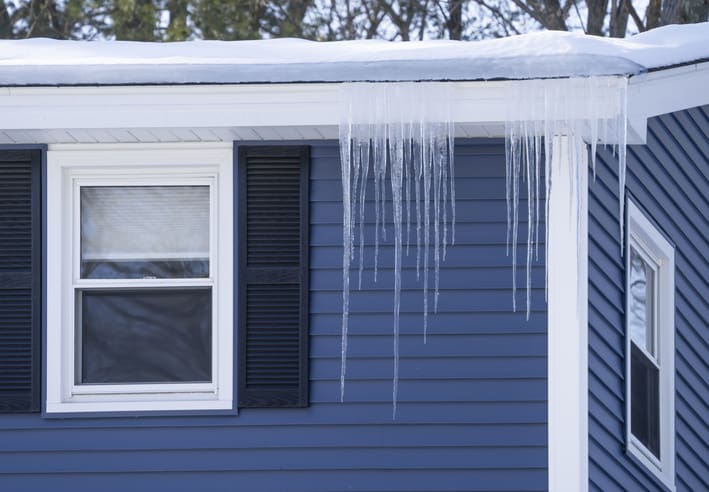
Ice dams occur when snow on a roof melts and refreezes near the roof’s edge. This creates a barrier that prevents melted snow from draining properly.
Water trapped behind ice dams can seep under shingles and cause roof leaks.
What Causes Ice Dams
Ice dams form when heat from the attic warms the roof surface.
The process typically follows these steps:
- Snow melts on warmer sections of the roof.
- Melted water flows toward colder roof edges.
- The water refreezes near the eaves.
- Ice buildup blocks drainage.
This cycle can continue during freezing conditions.
Improve Attic Insulation
Proper attic insulation helps prevent heat from escaping into the attic.
Better insulation keeps the roof surface colder, reducing snow melt and ice formation.
Ensure Proper Roof Ventilation
Ventilation helps maintain consistent attic temperatures.
By removing warm air from the attic, ventilation reduces uneven roof temperatures that contribute to ice dams.
Remove Snow from the Roof
Using a roof rake to remove excess snow near the roof edge can reduce the risk of ice dams forming.
Removing snow prevents the melting and refreezing cycle.
Seal Air Leaks
Warm air from living spaces can enter the attic through small openings.
Common leak locations include:
- Light fixtures
- Attic access doors
- Wiring openings
- Plumbing vents
Sealing these gaps helps maintain stable attic temperatures.
Install Ice and Water Shield
Ice and water shield is a waterproof roofing membrane installed under shingles.
It helps prevent water from penetrating the roof if ice dams form.
Final Thoughts
Ice dams can cause serious roof damage if not prevented. Improving insulation, ventilation, and attic sealing helps protect your roof during winter conditions.
Need Professional Help?
Some home projects are better handled by a professional. Angi can help you find local professionals for repairs, maintenance, remodeling, and other home projects. Click the link below to find a local pro in your area.

Find a Local Pro →https://www.jdoqocy.com/click-101849128-17142826
Affiliate disclosure: We may earn compensation if you use links on this page.

Article Disclaimer
The information provided in this article by YourRealEstateAdviser.com is for informational and educational purposes only and should not be considered legal, financial, real estate, or professional advice.
While we strive to provide accurate and up-to-date information related to real estate, markets, buying, selling, and investing, we make no guarantees regarding the completeness, accuracy, or reliability of any content.
Real estate decisions involve significant financial and legal considerations. You should consult with a licensed real estate agent, attorney, financial advisor, or other qualified professional in Kentucky or your applicable jurisdiction before making any decisions.
Any examples, projections, or potential outcomes discussed are illustrative only and are not guarantees of results. Your outcomes may vary based on market conditions and individual circumstances.
This article may contain affiliate links. We may earn a commission at no additional cost to you if you choose to make a purchase through these links.
By reading this article, you acknowledge that you are solely responsible for your decisions and actions.